Mary at 90: A Lifetime of Cooking features Mary looking back on how cooking has evolved since she began her career in the 1960s.
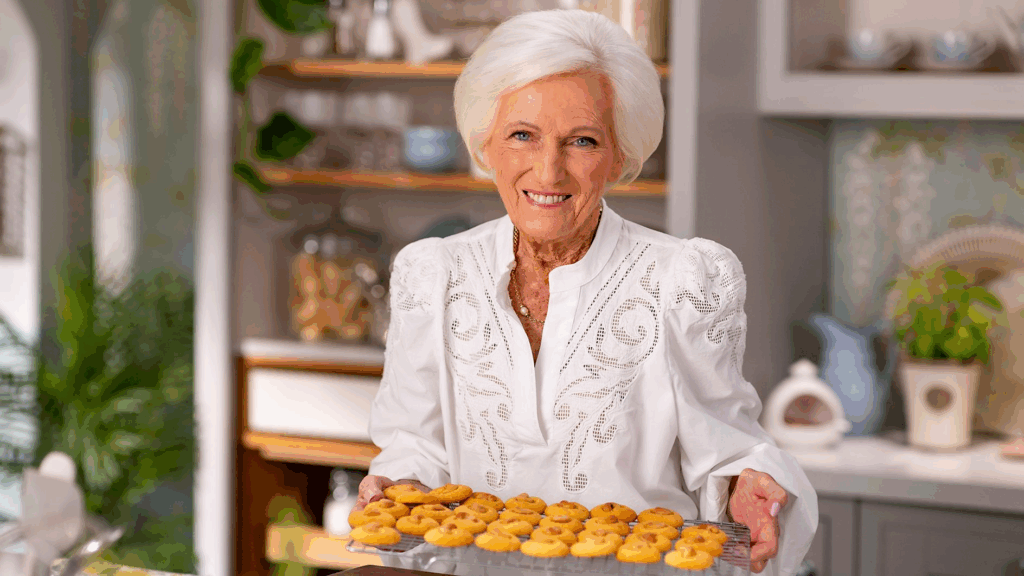
At 90, Dame Mary Berry continues to cook and write while taking an engaging look back over her remarkable culinary career, bringing viewers fresh and exciting recipes in a special six-part series on BBC Two and iPlayer.
Mary at 90: A Lifetime of Cooking, produced by Sidney Street, explores how cooking has evolved since Mary began her career in the 1960s.
Joined by cherished friends, both familiar and new, Mary demonstrates some of her favourite recipes while sharing charming stories from her long-standing culinary legacy, drawing from her personal archives and vintage footage. Alongside revisiting her most iconic dishes, she reinvents classic recipes and introduces brand-new creations, showing that even at 90, it’s never too late to experiment in the kitchen.
Catch Mary at 90: A Lifetime of Cooking on BBC Two and iPlayer from 28 October.
Mary Berry
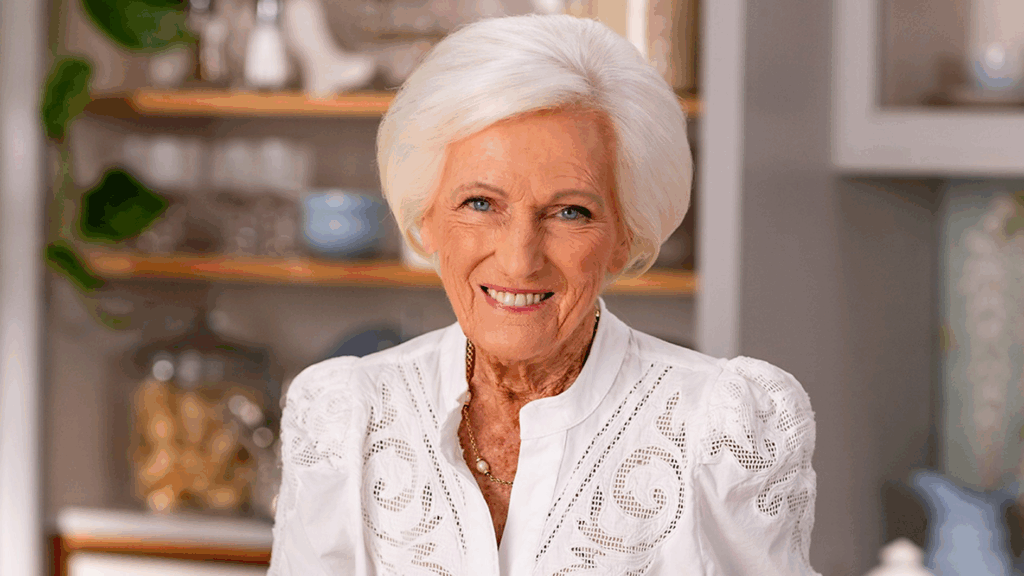
Dame Mary Berry on her new series and celebrating 90 years
Tell us about your new series.
“It’s been such an exciting journey,” Mary Berry says of Mary at 90: A Lifetime of Cooking. “Filming felt like a trip down memory lane, reflecting on some of the most memorable moments of my cooking career alongside friends, both old and new. We even included archive clips from when I first started — some I hadn’t seen in decades. It was wonderful to see how much cooking has changed, yet how some things remain the same.”
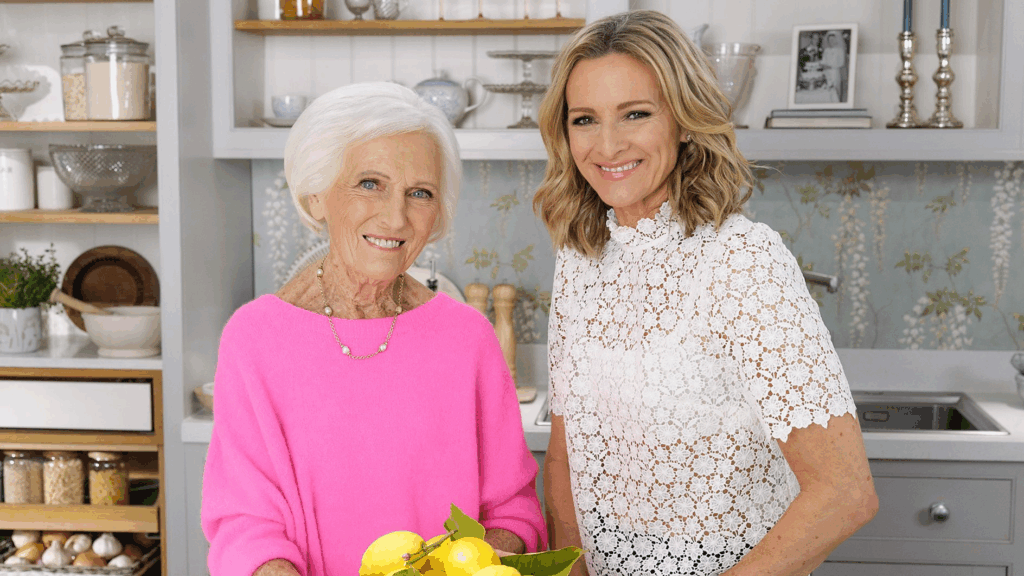
Mary was joined in the series by Tom Allen, Gabby Logan, Jamie Oliver, Alex Jones, Alan Titchmarsh, and Kiell Smith-Bynoe, cooking both new recipes and reimagined classics with each guest. “There were moments of celebration and reflection throughout,” she recalls. “Toasting champagne with Jamie Oliver while sharing my lemon drizzle cake was unforgettable. Alan Titchmarsh baked his very first cake, and Alex Jones made my Victoria sponge with me — it’s always special to see someone recreate one of your recipes. But it wasn’t just about cakes; each episode features a variety of recipes with the guests.”
How have you celebrated turning 90?
Mary describes her 90th year as a “wonderful year-long celebration,” full of surprises and events she never imagined, including a Vogue photoshoot. “The One Show even made a special programme for my birthday,” she says. Alex Jones took her back to Bath to revisit places important to her — where she was born, went to school, and trained in cooking.
“That education was central to my career. Understanding the science of cooking helped me know why a Victoria sponge sinks and why recipes work the way they do. It’s been invaluable.”
Mary was also surprised with a special studio event featuring guests like Mel and Sue, Claudia Winkleman, Michael Ball, and messages from friends and her husband, Paul. “It was quite overwhelming,” she admits.
Alongside the series, Mary also released her book Mary 90, featuring her all-time favourite recipes, celebrating a career spanning 60 years. “The time has flown; I can hardly believe it!”
Looking back at the start of your career
Mary reflects on her very first cookery programme, noting her high-pitched, nervous voice. She was spotted by Diana Potter, producer of Good Afternoon in the 1960s, after writing for Home and Freezer Digest, a magazine dedicated entirely to freezing. “Diana saw the magazine, read it, and thought, ‘This girl talks sense. Get her to the studio to talk about freezing with Judy Chalmers.’ And that’s how it began.”
In those early days, there was no supporting team or proper studio kitchen. “I would arrive at 7:30 in the morning while they built the kitchen. The clock went up, the work surfaces were awkward, drawers wouldn’t open — it was a pretend kitchen, except for the cooker and fridge! I brought every knife, pan, and ingredient myself. I was nervous and wanted it to be perfect.”
Judy Chalmers offered crucial guidance. “She said, ‘You’re not smiling or talking to the crew. They’re helping you — look at them and smile.’ I was concentrating so hard I forgot to enjoy it. From that day, I smiled, spoke to everyone, and it completely changed my experience. I really started to enjoy it.”
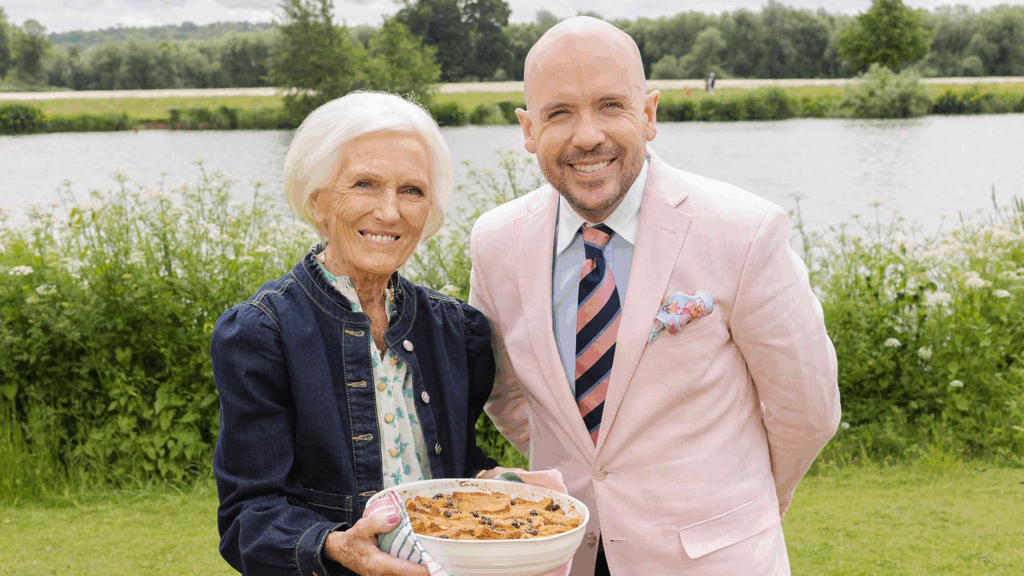
Dame Mary Berry on her TV career and love of cooking
Good Afternoon was your first regular TV appearance — and you’ve been on screen ever since?
“Yes, that was the beginning,” Mary recalls. “After that, I did many series for Thames Television from our home, which we revisit in Mary at 90: A Lifetime of Cooking. Filming from home was wonderful because it was a real, functional kitchen — I could reach for knives, forks, and pans easily, unlike a studio set. They even had to remove a whole plate glass window to fit the cameras, and it was freezing! Blow heaters were placed by my feet. And of course, there were some funny moments with our dog Wellington — once he nibbled on the cake decorations, but luckily stayed out of shot.”
How do you feel about watching yourself back?
“I haven’t seen some of these clips for decades,” Mary says with a laugh. “I still have one of the shirts I wore! Seeing the episode introducing freezers is funny — what we now take for granted was once groundbreaking.”
You’ve clearly always enjoyed teaching through cooking.
“Absolutely. My first job after college was as a home service advisor for the South Western Electricity Board. I did demonstrations for women’s institutes and in church halls, showing how amazing electricity was and how to use new thermostatically controlled ovens. I’d even visit people’s homes if they had problems with their electric cooker — sometimes making a Victoria Sandwich cake to test it.”
Magazines, radio, and then television followed. “Television is the best cookery class you can have — millions of people watching! But whenever I’m filming, I imagine I’m speaking to just one person. Judy Chalmers gave me this advice, and I still follow it: ‘You’re talking to one person. They might be doing the ironing or feeding their baby, but if you keep their interest and inspire them to cook, they’ll stay with the show.’”
What makes cooking so special?
“Cooking is something everyone does every day. Breakfast is usually simple, lunch can be quick, but dinner is when people really want to enjoy a meal — alone, with family, or with friends. I want my recipes to be achievable, cost-effective, and tasty. Helping people find inspiration for dinner parties or guiding non-cooks through an easy supper — that’s what brings me joy.”
What is it that you love about teaching people?
“I adore teaching cooking, whether it’s through television, radio, or my books,” Mary Berry explains. “In my books, I was one of the first to introduce step-by-step techniques. I find it helps to write instructions in numbered steps or short paragraphs so readers can tick off each stage as they go. I make sure everything is accurate — ingredients carefully weighed, instructions checked. If there’s a tricky part, I offer tips, like ‘take care here,’ or how to fix a curdled mixture. I want to guide people’s hands so they succeed every time.”
Seeing others enjoy her recipes is deeply rewarding. “Nothing makes me happier than watching someone take their first bite and think, ‘Oh, yes, this is good!’ It’s a joy to share the pleasure I get from creating recipes. I hope people feel that same excitement when making my recipes at home, bringing family and friends together, and perhaps even sparking conversations about cooking.”
Mary recalls a personal example: “A week after filming with Alan Titchmarsh, he remade my smoked salmon, asparagus, and dill spaghetti. He even sent me a picture of it with a glass of wine! That brought me so much joy — it made me smile from ear to ear. Moments like that are truly indescribable.”
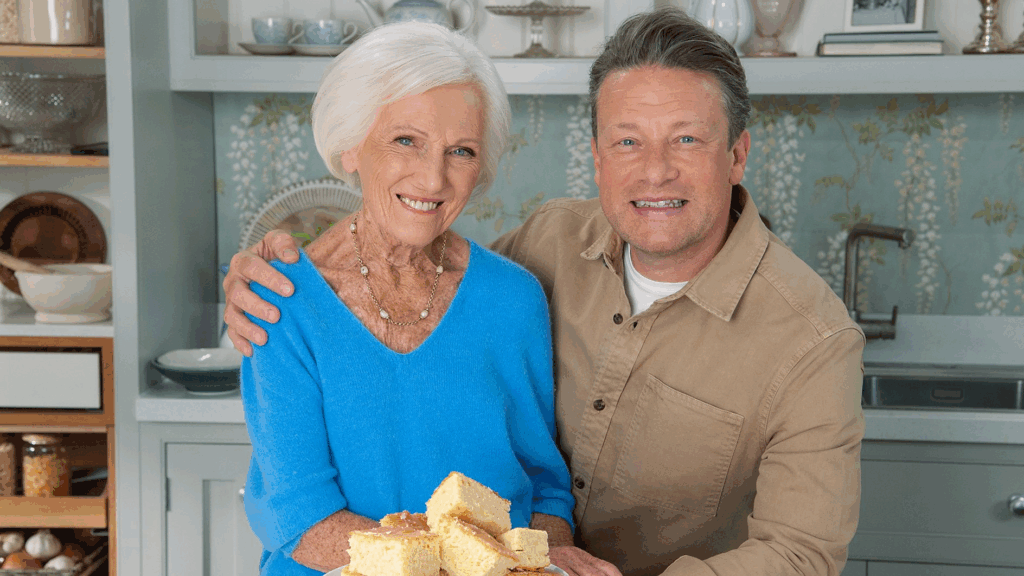
Looking back at the 60 years in your career, what do you love about your cooking career? What are the highlights for you?
Do you know what I really like, over all my cooking time, is sharing what I love, sharing my tips. If it’s seasonal, I love to say, “Now, look, the apples are falling off the trees, why don’t you make my apple cake?” It’s so simple, it’s all in the bowl together, and the family are going to ‘ooh and ah’ about it.
Also, I love to help people save food if you can’t eat it all in one go. People tell me that I make a lot of cakes and I do enjoy one for Sunday tea, I make an absolutely beautiful cake but it’s better to leave the other half of the cake, wrap it, carefully, put it in the freezer.
Then, when you’ve got some friends round for coffee, just divide it up into portions, put it on the plate, and it’s, everybody can enjoy it a second time around.
Giving people solutions is also a joy to me. If someone is a nervous cook or a time-poor cook or an inexperienced cook for events like dinner parties, I want to help people to find the love in cooking and help them achieve success. It isn’t only me that comes up with tips, Lucy Young who you see with Alex Jones in episode four has been with me for 36 years, by my side we work together on everything. She’s wonderful at sharing tips, usually to make something quicker or simpler.
Lucinda, who tests our recipes, she’s got two young children, very busy working and doing other things, that she always has a macaroni cheese in the freezer. And I must say, I have tried originally to do it, and it, it wasn’t runny enough. And so, together, we set to and made a macaroni cheese with a little bit less actual macaroni in it, and the sauce, with all that lovely cheese and mustard in, more sloppy.
We make this in episode two and when you look at it, it looks too runny, but when it goes in the freezer, freeze it and cook it straight from frozen and you’ll have a lovely runny, just the right amount of sauce around it, a lovely crispy top, with all that grated cheese, nice mature cheddar cheese.
It’s a great stand-by for busy people because in 20 minutes in the oven it’ll be done, while you’re just laying the table and hanging a coat up.
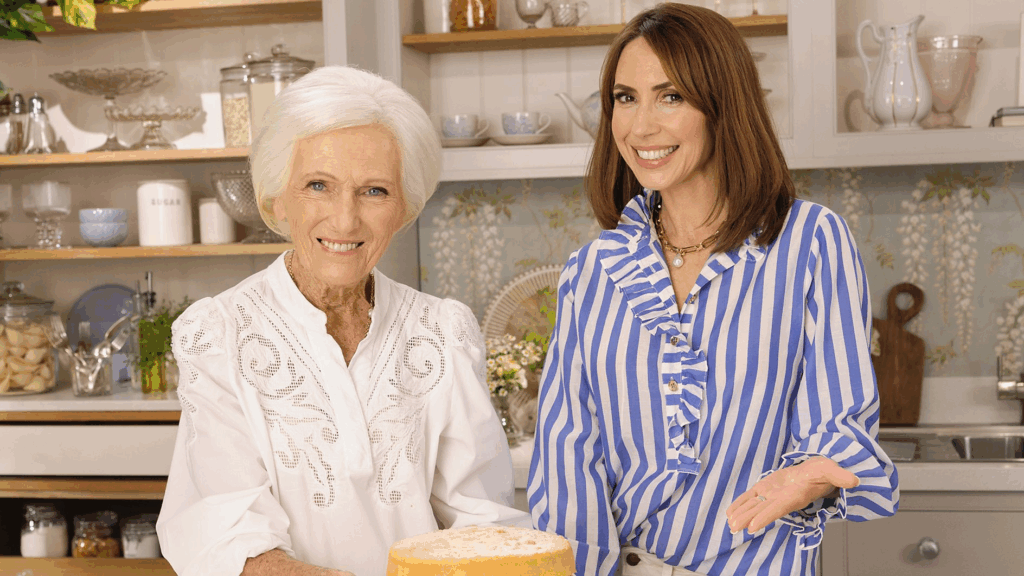
You’ve seen so many things change during your career – what have been some of the big changes?
So many things have changed – freezing we’ve talked about but also ingredients have changed a lot. In the 1960s along came avocado pears – no one knew what they were, people were talking about serving them with custard! But then they came out, and you simply pressed them to see if they were ripe, cut them in half, took the stone out, and put French dressing in the middle and they were absolutely delicious.
Look now how the avocado has grown! Young people love them, they spread avocados on toast, they put it with crispy bacon on the top, all sorts of things. While they used to be unusual they are now a regular staple. Similarly with prawns, prawns used to be a real treat – but now they are readily accessible.
Vegetables have evolved. Fennel was almost unheard of, although historically, it’s always been available. Celeriac is much more popular now as is butternut squash! Squashes were usually only seen as decoration at Harvest Festival at church, you’d have a whole lot of squashes on the front, but nobody ate them. But now butternut squash has become one of the most favourite foods of many people, and so I have reflected that in my recipes using those ingredients a lot more, because they’ve become popular.
Spices have also really developed – cinnamon you would only use in a sweet dish but now it’s a regular ingredient in many savoury dishes. In my early days, it was all dried herbs, and in my mother’s day it was literally thyme, rosemary, sage, that was just about it, and now we use so many more, but fresh herbs! You’ve only got to go to a supermarket. You have a whole section of beautiful fresh herbs, some of them very easy to grow in your own garden, and we use a lot of them. And I don’t use dried herbs at all.
How we get our recipes has completely changed. Back in the days of Good Afternoon we asked people to send a Self-Addressed Envelope so that we could send the recipes back to viewers. In this series – we’ve got a QR code in the programme that viewers can scan to get the ingredients and methods.
The internet has changed this how people talk about food, people taking pictures of their dishes before they eat them – sharing tips on the internet is a wonderful thing and gets people talking and sharing recipe ideas. As Jamie says, recipes used to be spread by word of mouth – but now of course they go viral because of the internet.